Book Categories:
Wait, don't go!
We have a special offer just for you!
Get 20% off your next purchase.

Book Categories:


We have a special offer just for you!
Get 20% off your next purchase.
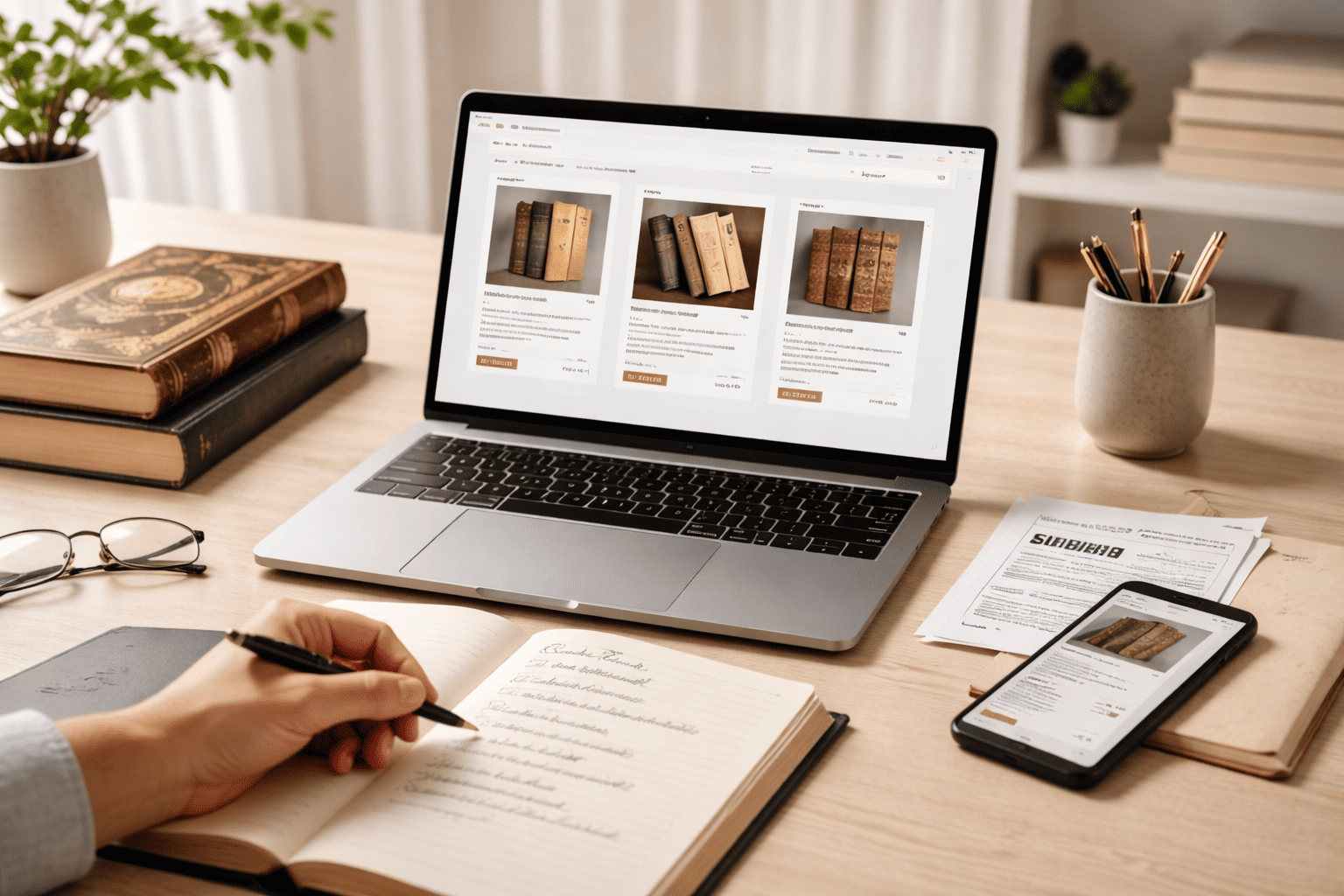

Buying rare books online has made the market more accessible than ever. A collector can now compare copies across countries, consult specialist dealers from a private desk, and encounter material that would once have required travel, catalog subscriptions, or attendance at fairs and auctions. This expansion of access is valuable, but it has also created a dangerous illusion: that rare books can be bought as casually as ordinary second-hand goods. They cannot. The online environment makes opportunity easier, but it also increases the risk of superficial decisions, weak descriptions, and expensive mistakes. For that reason, the intelligent buyer must approach online purchasing with more discipline, not less.
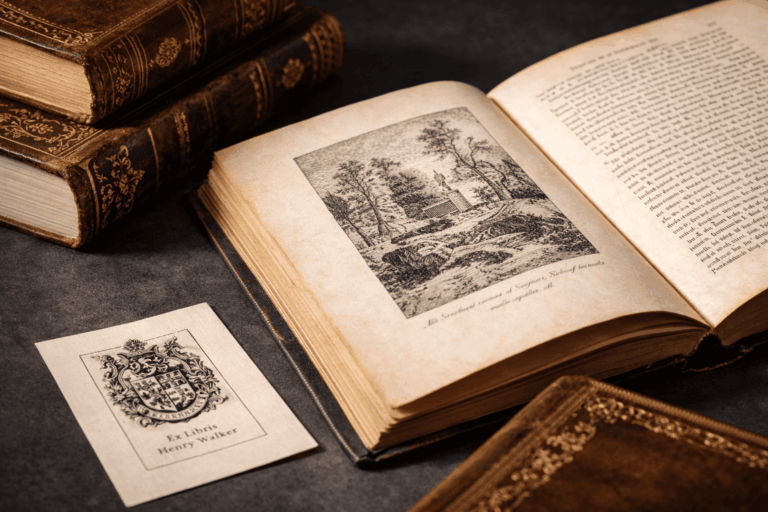
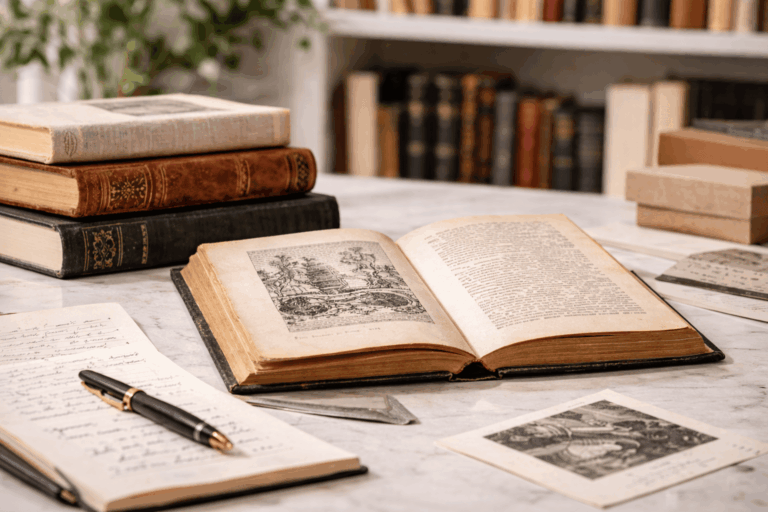
One of the most common mistakes is buying from photographs alone. Images are useful, sometimes essential, but they are never sufficient by themselves. A rare book is not simply a visual object. Its value depends on edition, completeness, condition, restoration, provenance, and bibliographic accuracy—many of which cannot be judged fully from a few attractive images. Sellers know this, and weak listings often rely on atmosphere rather than precision. A well-lit photograph of an old leather binding may create confidence while concealing missing pages, rebacking, repaired joints, cropped margins, or later facsimile leaves. The serious buyer must read descriptions critically and never allow visual appeal to replace evidence.
A related mistake is failing to verify the edition. Many buyers see a desirable title and assume that age or appearance confirms significance. In reality, one of the central questions in rare book collecting is not simply what the book is, but which edition, printing, issue, or state it represents. A later edition of an important work may be interesting, but it is not the same object as a first edition. Casual online listings often use attractive but vague phrases such as “early edition,” “antique book,” or even “rare” without giving the bibliographic details required to support the claim. Buyers who do not ask precise questions often end up paying a premium for an ordinary copy.
Another major error is underestimating condition. Beginners sometimes assume that age excuses almost any flaw. That is false. Rare books are expected to show signs of time, but certain defects materially affect value and desirability. Missing leaves, detached boards, cracked joints, mold, worming, heavy foxing, staining, restoration, or loss of maps and plates are not minor matters. Online listings often mention faults in language that appears mild but carries serious implications. Words such as “worn,” “shaken,” “repaired,” or “working loose” may describe defects that deserve close scrutiny. A buyer who does not understand this vocabulary risks acquiring a compromised copy while believing it to be acceptable.
Many people also make the mistake of treating the lowest price as the best opportunity. In the rare book market, an unusually cheap copy is often cheap for a reason. That reason may be poor condition, incomplete collation, weak authenticity, vague description, or simply an unreliable seller. Good books at fair prices exist, but rare books are not a market in which price alone can guide judgment. A higher-priced copy from a reputable specialist who provides full bibliographic detail, accurate condition notes, and professional communication is often a far safer and ultimately wiser purchase than a cheaper copy from an anonymous source.
Seller quality is in fact one of the most important variables in online buying. A common mistake is assuming that all platforms or vendors are equivalent. They are not. Specialist antiquarian booksellers build reputations on accuracy, disclosure, and expertise. General resale platforms often do not. That does not mean good books cannot appear on broader marketplaces, but it does mean the burden of verification becomes heavier. Buyers should examine whether the seller provides detailed descriptions, multiple photographs, return policies, and informed responses to questions. Vagueness is a warning sign. Precision is usually a good one.
Another error is neglecting to ask for more information. Some buyers hesitate, either from impatience or from fear of appearing inexperienced. This is a mistake. It is entirely reasonable to request additional photographs of the title page, spine, binding, colophon, plates, inscriptions, or damaged areas. It is also reasonable to ask whether the book is complete, whether it has been restored, whether the binding is original, and whether any defects are not fully visible in the listing. A serious seller will understand such questions immediately. An evasive response is information in itself.
Collectors also frequently ignore provenance when buying online. Yet inscriptions, bookplates, shelf marks, and ownership traces can significantly affect both interest and value. The reverse is also true: institutional marks, withdrawn library stamps, or undocumented signatures may have implications that should be understood before purchase. Provenance should not be treated as a decorative curiosity. It is part of the bibliographic and historical reality of the copy.
Finally, one of the deepest mistakes is buying too quickly. Online markets reward speed, but collecting rewards judgment. The constant visibility of inventory can create artificial urgency, as though every listing must be acted upon immediately. In most cases, that pressure is psychological rather than rational. Better results come from comparison, patience, and study. One should examine multiple copies, compare condition and price, consult bibliographic references when needed, and buy only when the object has been understood.
The rare book market online offers extraordinary access, but access without discipline leads to error. A rare book should never be bought as a decorative impulse or a hurried bargain. It should be bought because its edition is known, its condition is judged, its seller is credible, and its value makes sense within the larger logic of collecting. That is how online buying becomes not a gamble, but a serious extension of good bibliographic practice.