Book Categories:
Wait, don't go!
We have a special offer just for you!
Get 20% off your next purchase.

Book Categories:


We have a special offer just for you!
Get 20% off your next purchase.


A personal library should be more than a storage space for books. It should express a way of thinking, a pattern of interests, and a standard of selection. Many people accumulate books over time, but accumulation alone does not create a library with identity. A meaningful library possesses character: a sense of coherence, intellectual shape, and aesthetic intention. It also possesses cultural value, not necessarily because every volume is rare or expensive, but because the collection as a whole reflects judgment rather than habit. To build such a library requires more than buying books. It requires curation.
The first step is to decide what kind of library you want to build. This may sound obvious, but in practice many collections remain vague because their owners never define their purpose. A personal library can be scholarly, literary, artistic, historical, thematic, aesthetic, or mixed. It may center on a discipline, a period, a language, a region, an author, or a concept. It may also combine practical reading copies with rare or antiquarian material. What matters is not that the library follow a rigid formula, but that it reflect a clear intellectual direction. Without some form of organizing idea, even a large collection risks becoming random.
Character begins with selectivity. A library gains force not from the number of books it contains, but from the logic of inclusion. Every strong collection is shaped as much by exclusion as by acquisition. This means resisting the temptation to buy indiscriminately, whether from convenience, impulse, or decorative ambition. Books should enter the library because they contribute something: insight, historical depth, visual distinction, or structural coherence. A small, well-chosen collection often has more character than a larger one assembled without discrimination.
Cultural value, meanwhile, arises from the relationship between books and ideas. A culturally valuable library is one that preserves more than private preference. It sustains conversation with literature, history, philosophy, religion, politics, science, art, or the history of the book itself. Such a library does not need to imitate an institution, but it should aspire to substance. A shelf filled only with fashionable or disposable titles may reflect current taste, but it rarely develops lasting significance. By contrast, a library that combines enduring texts, historically relevant editions, and thoughtful thematic structure becomes a record of intellectual seriousness.
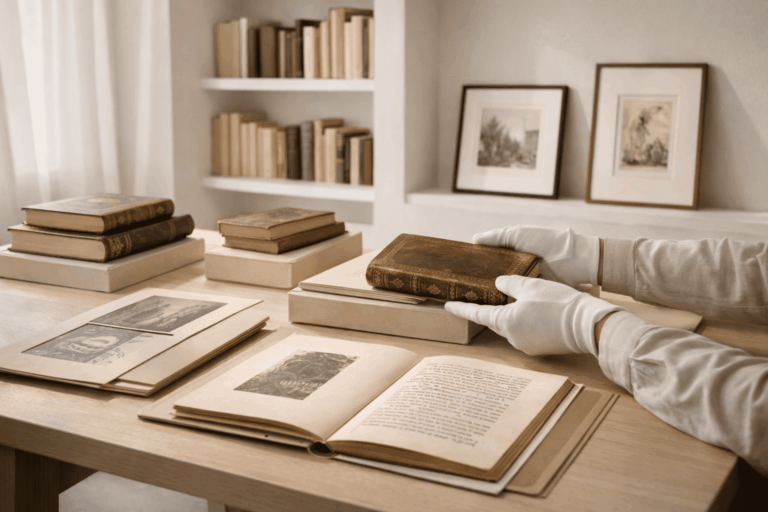
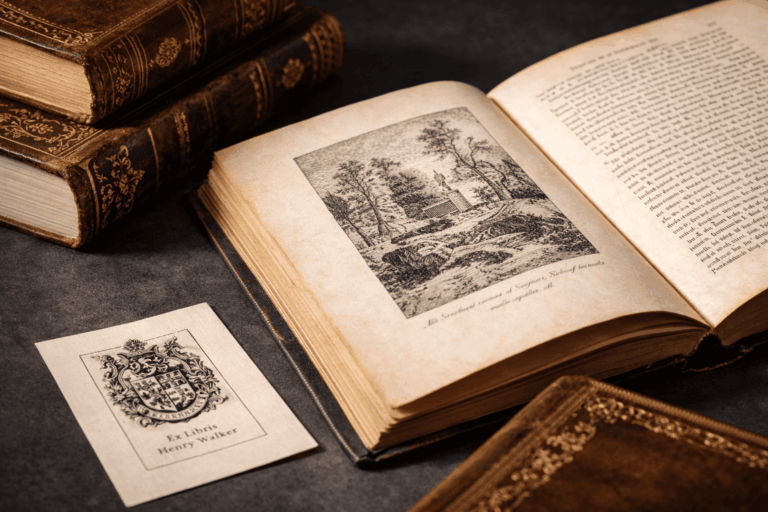
Editions matter in this process. The same text can exist in many physical forms, and those forms shape the character of a library. Some collectors prefer fine modern editions for readability and design. Others seek first editions, illustrated editions, scholarly editions, or antiquarian copies that carry material evidence of their historical moment. There is no single correct approach. What matters is consistency of standard. A library gains depth when the owner pays attention not only to titles, but also to the quality, condition, and appropriateness of the editions selected. The physical book is not incidental. It is part of the cultural meaning of the collection.
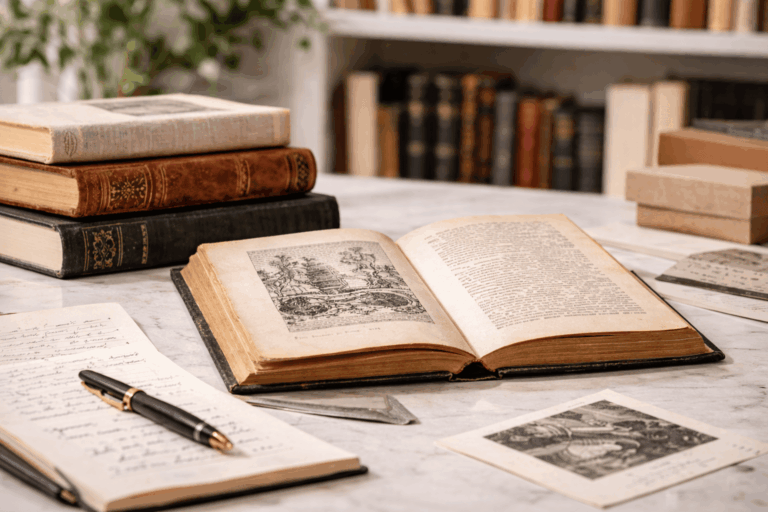
Aesthetic coherence also plays a role. This should not be misunderstood as decorative uniformity. A serious library is not a furniture display. Yet the visual and tactile qualities of books—their bindings, typography, paper, dust jackets, and formats—do contribute to atmosphere and identity. A room lined with books chosen solely by color may be visually coordinated but intellectually empty. Still, a library in which visual qualities are entirely ignored often loses an important dimension of pleasure and intentionality. The strongest collections unite thought and form: books chosen both for what they contain and for what they are as objects.
No personal library develops fully at once. It must be built gradually, with revision over time. Some books will prove central; others will later seem accidental or superficial. This process is natural. A good collector periodically reassesses the collection, removing what no longer fits and strengthening areas of real depth. In this respect, a personal library is not static. It is an evolving argument about what matters. Its character emerges not from instant completeness, but from sustained refinement.
Documentation is also worth considering. Recording editions, acquisition dates, provenance, inscriptions, or personal reasons for purchase adds another layer of value to a library. Such records help preserve the intellectual structure of the collection and may later matter to heirs, institutions, or future collectors. A personal library with documentation is not only more orderly; it is more legible as a cultural project.
Finally, one should remember that a personal library reflects the mind of its owner more honestly than almost any other private possession. It reveals interests, standards, curiosities, and omissions. For that reason, building a library with character requires honesty. Do not collect to imitate what looks impressive from a distance. Collect what you are genuinely prepared to return to, study, preserve, and defend as worthy of space in your life.
A library with cultural value is not created by price alone, nor by antiquity, nor by fashionable prestige. It is created by thoughtful selection, consistency of purpose, respect for the book as object, and commitment to ideas that endure. When these elements come together, a personal library becomes more than a room of volumes. It becomes a shaped intellectual environment—one that reflects memory, discipline, and taste in equal measure.